Ancient Egyptian Sehmet Helmet (supports 3D printing)

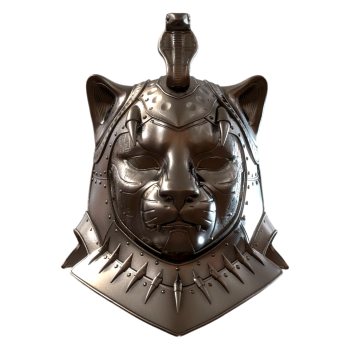
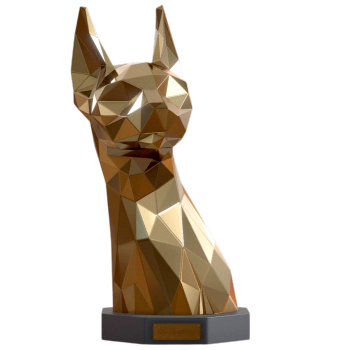
Ancient Egyptian Sehmet Helmet (supports 3D printing)

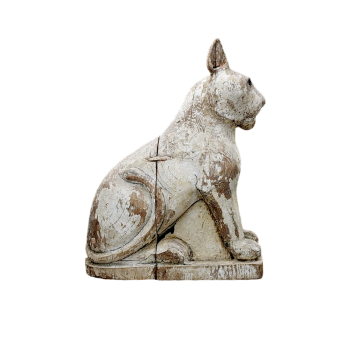
Saihmet (Sekhmet), a lioness god in ancient Egyptian mythology, was originally the goddess of war and the goddess of medicine in Upper Egypt. She is portrayed as a lioness, recognized by the Egyptians as the fiercest hunter. It was said that her breath formed a desert. She was seen as the patron saint of the pharaohs and guided them in war.
Avaris, the capital of the Hyksos dynasty in ancient Egypt
Avaris, the capital of the Hyksos dynasty in ancient Egypt

It is a city in the eastern Nile Delta of ancient Egypt, and historically served as the capital of the Hyksos dynasty. They were a group of people from the Near East who ruled northern Egypt from the 17th century BC to the 16th century BC. According to archaeologist Manfred Bitak's research, the site of Avaris has been discovered near the modern village Tellel-Dab'a, where he has been leading archaeological excavations since 1966. Avaris was located on the Pelusian branch of the Nile River at that time, with a superior geographical location and convenient access to the Mediterranean coast and the Nile Valley.
The sickle shaped sword of ancient Egypt

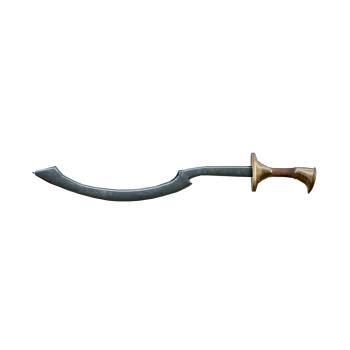
The sickle shaped sword of ancient Egypt

Also known as' Khepash ', it is a symbolic weapon in ancient Egyptian civilization, with a history dating back to around 3000 BC. The characteristic is that the sword body is curved, resembling a crescent moon, and the sword tip is sharp. Not only is it a weapon in actual combat, but it is also a symbol of power for pharaohs and senior officials, commonly seen in religious ceremonies and celebrations. The design gives it a unique advantage on the battlefield, with a curved sword body that increases the range and power of strikes, while the sharp tip of the sword can be used for stabbing. Over time, the Khenpash gradually disappeared from the battlefield, but its status as a symbolic weapon remained unchanged.
Egyptian Lotus Vase

Egyptian Lotus Vase

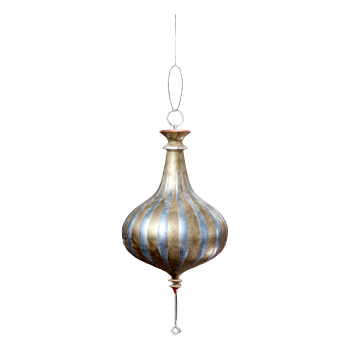
Egyptian lotus vase is a decorative item inspired by ancient Egyptian art. Lotus symbolizes the rebirth of life and the rise of the sun in ancient Egyptian culture, often seen in tomb murals, sculptures, and decorative arts. The design of such vases usually combines lotus patterns with typical elements of Egyptian art, such as hieroglyphics or pharaoh patterns. They may be made of ceramics, stone, or other materials, and their surfaces may be coated with gold or colored decorations to imitate the magnificent style of ancient Egypt. The Egyptian lotus vase is not only a tribute to ancient Egyptian civilization, but also an exploration and application of classical aesthetics in modern design.
Alabast bottle

Alabast bottle

It is a small pottery or glass container used to hold oil. Originating from ancient Egypt in the 11th century BC, it was originally a container carved from snowflake plaster, which is also the origin of the name "Alabast Bottle". Over time, this type of container began to be made using more materials besides snowflake gypsum. Most Alabast bottles have a similar shape, with a slender body and a circular bottom. Usually there is an opening with a lip at the top, and there may be small handles on both sides of the container neck.
Cambridge Fitzwilliam Museum Ancient Egyptian "Frog" Pottery Oil Lamp

Cambridge Fitzwilliam Museum Ancient Egyptian "Frog" Pottery Oil Lamp

The pottery oil lamp is a molded product of the ancient Egyptian "frog" type, with a circular oil storage tank, a hole in the center of the top, and concentric ring decorations around it. The top of the oil storage tank is decorated with a concave "frog and corn" pattern, and the base has a concave ring around the raised pottery mark. The nozzle extends from the main body of the oil lamp and also has a concave decoration. Burning spots with traces of use left on them. The oil lamp is made of brown Nile silt with a gray core inside. It can be traced back to the 2nd to 4th centuries AD. From the Fayum region. Now part of the collection of the Fitzwilliam Museum in Cambridge
Shabuti Coffin (First Half)

Shabuti Coffin (First Half)

It is a container used for funerals in ancient Egypt, specifically designed to hold Shabuti figurines, which are small wooden or ceramic figurines representing the servants of the deceased in the afterlife. The design inspiration comes from Osiris, the god of resurrection and afterlife in ancient Egypt, usually presented in the form of a mummy. The surface usually features exquisite paintings and pictographic inscriptions, taken from the Book of the Dead, to protect and guide the souls of the deceased. The shape and decoration vary by period and region, but they are usually humanoid or rectangular, sometimes with arched lids. Not only is it a part of funeral customs, but it is also a concrete manifestation of ancient Egyptians' concept of the afterlife.
Canopic jar from ancient Egypt

Canopic jar from ancient Egypt

It is a ceramic or stone container used in ancient Egyptian funeral customs to preserve the internal organs of the deceased. In the mummification process of ancient Egypt, the heart was considered the dwelling place of the soul and therefore remained in the body, while other internal organs were removed and stored separately in canopic jars to prevent the body from rotting. These jars are usually accompanied by four different head sculptures representing the four guardian gods of ancient Egyptian mythology, namely the Kanopik god: Imseti with a human head, Hapi with a baboon head, Douamutiv with a jackal head, and Kebshannav with a falcon head. Each god guards a specific organ: the liver, lungs, stomach, and intestines.
Egyptian female statue

Egyptian female statue

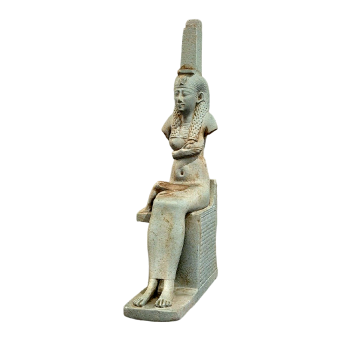
It usually refers to the female images of ancient Egypt, who held important positions in art, society, and religious life. In ancient Egyptian art, female images were often depicted as graceful and dignified postures, reflecting the respect and noble status of women in ancient Egyptian society. These images can be sculptures, murals, or paintings on pottery, depicting the daily lives, clothing, jewelry, and roles of ancient Egyptian women in their families and society. It also plays an important role in religious ceremonies, sometimes depicted as worshippers of gods or individuals directly associated with gods.
Ancient Egyptian Fish Shaped Palette

Ancient Egyptian Fish Shaped Palette

It is an ancient Egyptian artifact that can be traced back to the Nagada II period from 3500 BC to 3300 BC. Discovered in El Amrah (located on the west coast from Asgard to Thebes) and currently housed in the Louvre Museum in Paris, France. This color palette is made of sandstone and features carving techniques. It measures 16 centimeters in length, 8.6 centimeters in width, and 1.1 centimeters in thickness. Unique design, often associated with ancient Egyptian makeup culture, as it was used to grind and mix pigments for body painting. It may also have ceremonial or symbolic significance, closely linked to the religious and cultural customs of ancient Egypt
Little Royal Sphinx

Little Royal Sphinx

It is a 3D model replica collected in the Louvre Museum in Paris, France. Originally made of plaster material, it was jointly completed by the National Museum Art Studio and Rmn-P (Louvre and Osay Museum Picture Agency). This small sphinx is 13 centimeters high, 18 centimeters wide, and 5.3 centimeters deep. It is one of the representatives of ancient Egyptian art, showcasing the pursuit of mystery and symbols of power in ancient Egyptian civilization. The replica has not only been adjusted in size for easier exhibition and research, but also strives to be faithful to the original in details, allowing the public to experience the charm of ancient Egyptian art up close.
The Golden Throne of Tutankhamun in Ancient Egypt

The Golden Throne of Tutankhamun in Ancient Egypt

Ancient Egyptian figures, ancient sculptures, Pharaoh Anubis, werewolves, fiberglass

Ancient Egyptian figures, ancient sculptures, Pharaoh Anubis, werewolves, fiberglass

The kneeling statue of Egyptian Queen Hatshepsut

The kneeling statue of Egyptian Queen Hatshepsut

Hatshepsut (reigned from 1503 BC to 1482 BC). The queen of the 18th Dynasty of Egypt, who reigned for 21 years, passed away, and after her death, Syria and Palestine declared independence (later conquered by Thutmose III). After Thutmose III began to govern alone, he did not immediately begin to eliminate the traces of the governance of Hatshepsut. The related retaliatory actions were only launched in the late period of his reign, when the pharaoh ordered the destruction of many carvings engraved with her name and image.
Prop in the anime 'Game King': Millennium Ring

Prop in the anime 'Game King': Millennium Ring

Props in the anime 'Game King': Millennium Mystery

Props in the anime 'Game King': Millennium Mystery

Anubis Shrine in the Tomb of Ancient Egyptian Pharaoh Tutankhamun

Anubis Shrine in the Tomb of Ancient Egyptian Pharaoh Tutankhamun

The artifact is a gilded wooden shrine with a reclining statue of Anubis placed on top. This shrine was found in the "treasury" room of the tomb of Egyptian pharaoh Tutankhamun. The treasury room is a place in Tutankhamun's tomb used to store treasures and treasures. The shrine consists of two parts, with an insertable Anubis statue at the top and an independent storage room with a sliding cover at the bottom. The sliding cover can be opened to expose the internal compartments. The front part of the compartment is divided into four smaller compartments. At present, this cultural relic is housed in the Egyptian Museum.
The coffin of Pharaoh Amenhotep I of ancient Egypt

The coffin of Pharaoh Amenhotep I of ancient Egypt

This is the wooden coffin of Pharaoh Amenhotep I of the 18th Dynasty of ancient Egypt, currently housed in the Egyptian Museum in Cairo. In 1881, this coffin was discovered in the royal mummy vault of DB320 tomb. However, this is an alternative coffin originally made for a priest named Djehutymose. The inscription in front of the coffin calls on the god Osiris Winnever to provide Amenhotep I with bread, beer, cattle, poultry, and all good and pure things.
Statue of Sekemet (Sekhmet) in ancient Egypt

Statue of Sekemet (Sekhmet) in ancient Egypt

The statue of Sekemet (Sekhmet) is an isometric statue of one of the oldest known gods in ancient Egypt, about 6 feet (184cm) high. Her name is derived from the Egyptian word "sekhem" (meaning "power" or "might"), which is often translated as "the mighty". Sekemet is often depicted as a female with a lioness head, sometimes with the addition of a sun disc and uraos serpent. She was the goddess of war in ancient Egypt and was considered the protector of the Maat (balance or justice) and the Egyptian people. This statue of Sekemet is now on display in the Ancient Egypt Gallery at the Royal Ontario Museum.
The Sphinx of Hatshepsut in the Temple of Hatshepsut

The Sphinx of Hatshepsut in the Temple of Hatshepsut

This huge Sphinx depicts a female pharaoh Hatshepsut with the body of a lion and the head of a human with a turban and a false beard. Hatshepsut, (reigned 1503 BC -1482 BC). The Queen of the 18th Dynasty of Egypt died after 21 years on the throne, and after her death, Syria and Palestine declared their independence. After Thutmose III began to govern alone, he did not immediately proceed to destroy the traces of Hatshepsut's rule, and the related retaliation began late in his reign, when Pharaoh ordered the destruction of many carvings engraved with her name and image.
Tutankhamun gold mask 3D model

Tutankhamun gold mask 3D model

The gold mask of Tutankhamun was worn after the death of Egyptian pharaoh Tutkhamun in the 14th century BC. It was unearthed in 1922. It is located in the deepest part of the Egyptian National Museum in Cairo. There are quietly placed Egyptian national treasures: Tutankhamun's gold mask and gold coffin. Their owners died young more than 3300 years ago. Fortunately, his tomb was not looted and destroyed like other pharaohs, this makes the 10-year-old enthrone, 19-year-old mysterious death of the pharaoh is today one of the most famous.
The top of a pyramid

The top of a pyramid

This item was placed at the top of the funeral pyramid on the roof of the chapel. It shows the symbol of day and night. Unearthed in the Saqqara region of Egypt, the 18th dynasty of ancient Egypt, about 1325-1300 BC, made of limestone. It is currently housed in the National Museum of the Netherlands.
Ancient Egypt Queen Nefertiti Plaster Sculpture Queen Nefertiti

Ancient Egypt Queen Nefertiti Plaster Sculpture Queen Nefertiti

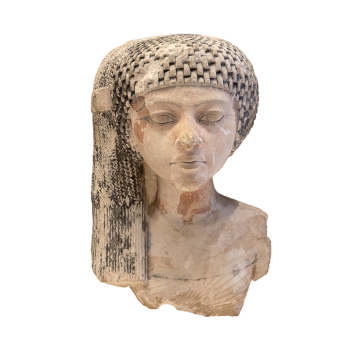
Nefertiti (Nefertiti) lived in the 14th century BC, roughly corresponding to the Shang Dynasty in China. She is the greatest queen of ancient Egypt. She has a breathtaking beauty. Her reputation is second only to Cleopatra. Her status is equal to Pharaoh's, but she suddenly disappeared from history when she was at the peak of power. All these have covered Nefertiti with a mysterious veil. Plaster sculpture of Queen Nefertiti. The original is cast from plaster (plaster) and is about 40cm high. It has a very unique texture.